Talks about moving the College Football Playoff schedule around have been a hot topic in college football.
With the national championship game being played deep into January, there has been chatter about changing the timeline to ease the burdensome calendar. Army football coach Jeff Monken has brought forward an idea to help the change.
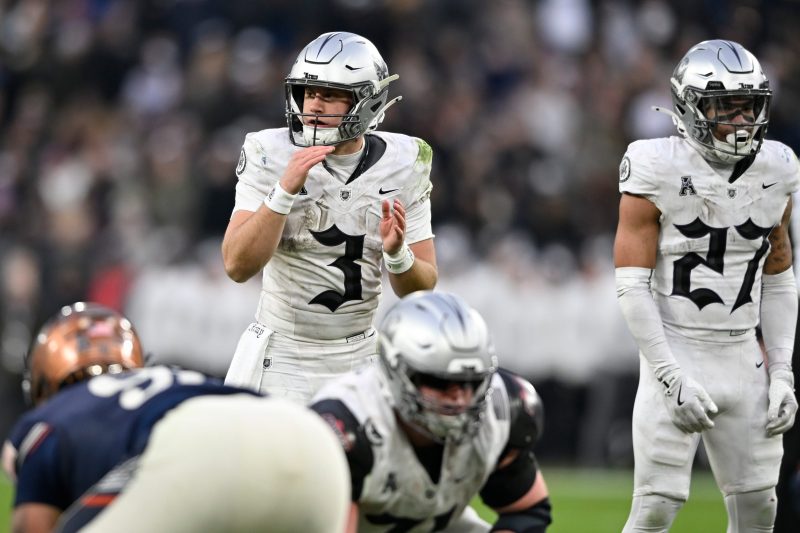
Monken, the Army coach since 2014, told The Athletic he favors moving the historic annual matchup between Army-Navy to Thanksgiving weekend, which could CFP to start a week earlier.
“There’s not an appetite for the college football season to go all the way to the end of January,” Monken said. “There’s a real hope that we can get this thing into one semester, and have the championship game around Jan. 1, which I think would be awesome.”
The Army-Navy game has been played on the second Saturday of December since 2009, to avoid running up against conference championship games. But one of the CFP’s reasons for starting the playoff two weeks after conference championship games has been the Army-Navy game.
However, prior to 2009, the matchup between the Black Knights and the Midshipmen was played on Thanksgiving weekend.
While the idea could garner some public backing, according to the Capital Gazette, Navy athletic director Michael Kelly was ‘surprised’ by the idea and does not seem to be a fan.
“I’m always open-minded to different options, but I’m not supportive of the Thanksgiving suggestion,” Kelly said. “I think that would be really detrimental to our revenue potential in terms of viewership and sponsorship.”
Both Navy and Army play in the American Conference, which means if either qualifies for the conference championship game, they would play back-to-back weeks and then potentially in the playoffs if they were to reach.
Monken’s idea is to make sure the game is preserved and not lost as a casualty to the potential growth of the CFP.
“I think Army-Navy is a huge part of the history of college football, and what it is today, even. Give us a four-hour block on Thanksgiving, or on Friday of Thanksgiving, or on Saturday of Thanksgiving, and give us a four-hour block, and just say nobody else plays during this four-hour block,” Monken said. “That’s still protecting the game.”
While Kelly agrees with Monken’s premise of protecting the game, he does not agree to the idea of moving the game up a week.
“While I understand the rationale and recognize the need to be flexible, I’m just not supportive of playing the Army-Navy Game on Thanksgiving weekend. I think it’s premature to jump to that holiday, which I don’t think would work,” Kelly said. “There is a reason why large-scale, neutral site college football games aren’t held around Thanksgiving. There are other better options that can be considered and discussed moving forward.”