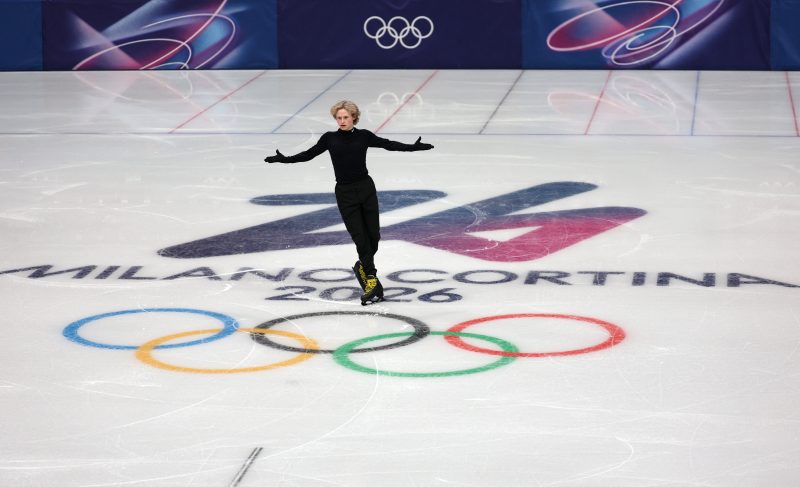
MILAN — U.S. Figure Skating has a dilemma, and it stems from one of the sport’s current truths: Ilia Malinin is just too good.
Malinin, the 21-year-old “Quad God,” is the heavy favorite to win the men’s individual gold medal next week at the 2026 Winter Olympics. But first comes the team competition Friday through Sunday, which the United States also can win — especially if Malinin skates both the short and long programs in the men’s category.
However, if Malinin skates both parts of the team competition, he will be pushing his body for one event when he really should be focusing on another: the all-important men’s individual competition that begins Tuesday, Feb. 10, with the short program and ends Friday, Feb. 13, with the long program.
Listen to ‘Milan Magic’ on Apple, Spotify, or wherever you get your podcasts. Watch full episodes on YouTube or on USA TODAY.
He and his coaches and the team around him would prefer he skate just the short program in the team event Saturday night, then not have to come back for the men’s long program — which will start at 10 p.m. local time Sunday night — and instead watch either Andrew Torgashev or Max Naumov take over. But Torgashev and Naumov have not performed well on the world stage and have nowhere near the experience Malinin has as the two-time world champion and four-time national champion.
The current plan, according to people with knowledge of the situation, is for Malinin to skate the men’s short program in the team event, at which time U.S. officials will assess the Americans’ medal position to decide if Malinin is needed in the long program. It’s possible he could “water down” his long program from his historic seven quadruple jumps to “only” three, as he did at the U.S. championships in January, but either way, he would be in the heat of competition with the crucial men’s individual event right around the corner.
Speaking on USA TODAY Sports’ ‘Milan Magic’ podcast, 1988 Olympic gold medalist Brian Boitano believes Malinin should not skate both team events.
“It’s too much responsibility,” Boitano said. “I hope that Ilia doesn’t choose (both) or they don’t try to put pressure on him to do it. I really don’t want him to have to do the short and the long. He’s dependable, he’ll do a great job, he will make the best of it, but at the same time, they have to start trusting these younger skaters. They have made the Olympic team. These guys are playing in the big ball park and you have to start relying on them.”
As this mini-drama plays out around him, Malinin is going about his business in Milan, practicing for whatever comes his way.
“I always use this approach for any competition or any event I go to,” he said in January. “What I will do is just not worry about putting so much pressure on myself, ‘Oh, I have to win the gold medal, I have to prove everyone wrong, I have to be the one who is liked by everyone.’
“Just being in the sport has really taught me how putting yourself first is actually a better way and I would say a more healthy way of progressing.”
In every social media post, Malinin appears to be embracing this moment with his own special brand of joy and bravado, confidently accepting the pressure that comes from the tremendous expectations placed on him at these Olympics. Yes, he is the self-named “Quad God,” but he knows nothing is guaranteed.
“I don’t want to tell people that I’m untouchable,” he said. ‘I want to do the opposite. I want people to relate to me even though, yes, I’m doing all these crazy things on the ice and defying physics in some ways. But I still want them to see that all of us skaters, we’re still human beings, we still have normal parts of our lives, we’re still very similar to anyone who’s watching in the crowd. We have emotions, we go through a lot of good things, a lot of bad things in life.
‘So it’s definitely just another way that I want to express to people, saying, ‘We’re human. We’re not perfect.’”