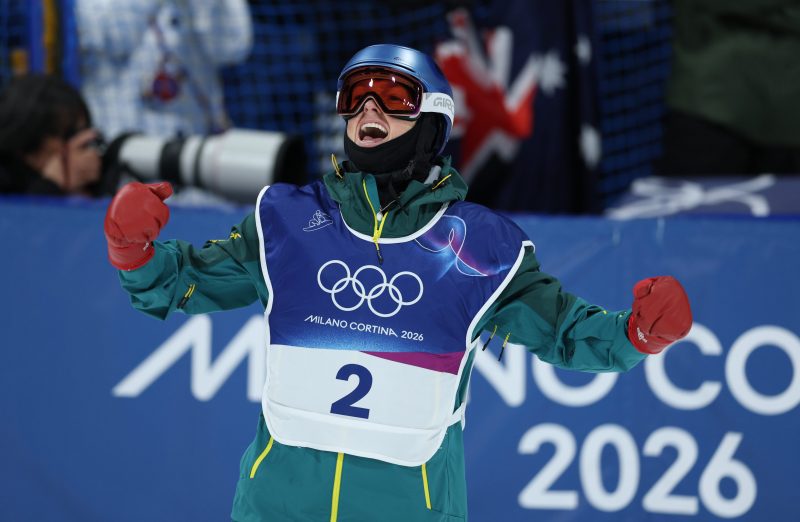
Japan’s Yuto Totsuka won the gold medal in a highly competitive men’s halfpipe final.
Australian Scotty James took silver, while Japan’s Ryusei Yamada earned the bronze.
The event showcased a significant progression in the sport, with the top four riders all scoring in the 90s.
A broadcast camera cable snapped during the final run but did not affect the competition’s outcome.
LIVIGNO, Italy – This is what sports are about. This is what the Olympics are about. What happened Feb. 13 in the men’s halfpipe final is the gold standard – pun intended – for high-level athletics.
What a treat it truly was.
Competitors pushed each other, and the sport, to levels that would have been incomprehensible even a few years ago. One country, Japan, dominated the top of the leaderboard, a display of the might they carry on the international snowboarding circuit in between the spotlight the Olympics provides the sport every four years. Plenty of heartbreak to go around, from those who gave their all to those who even made the podium. A nearly shocking moment – the cable of the overhead camera snapped during the final run of the night, with the gold medal very much still up for grabs – that did not actually, and thankfully, affect the integrity of the competition.
In the end, Yuto Totsuka of Japan stood atop the podium. His compatriot Ryusei Yamada took bronze. Between them was Australia’s Scotty James, still in search of that elusive gold medal, yet clearly successful in his quest to push the sport to the next stratosphere.
Because that’s where these guys were flying. The conditions were perfect – a cool but not too cold night, a slick pipe that was perfect for both speed and landing (the opposite of what the women dealt with in their finals a night earlier).
Campbell Melville Ives of New Zealand went for it all on his three runs and fell on his last hit as he ran out of room on the pipe each time. The lack of landing zone did not prevent his daring. South Korea’s Chaeun Lee was inconsolable after he put down an astounding final run after falling on his first two. But when his score of 87.50 (sixth place) came up, he was simply devastated. Japan’s Ruka Hirano had to be peeled off the snow once he realized he wouldn’t stand on the podium. Ziyang Wang of China spun like a thimble. The top four riders all had scores in the 90s, with 1.50 points separating Totsuka (95.00) and James (93.50).
Even the two Americans who occupied the final qualifying spots, Jake Pates and Chase Josey, threw down runs they were more than proud of – as they should have been.
Aussie Valentino Guseli, who went 5.8 meters in the air on his first hit of his last run and ended up with an 88.00 and a shrug that said “well, what can ya do,” understood why many of the women could not put down the runs they wanted the night prior in their final. The Olympic pressure is real, he said.
Scotty James’ gamble on final run backfires, but what a show it was
Like the best Olympic events, the gold medal came down to the final moment, with James needing another huge run to leapfrog Totsuka.
But James couldn’t land his final run. To put the exclamation point on the night, he went for a backside 1620, instead of settling for a 1440. The 1440 perhaps could have been enough for gold, Guseli said. James wasn’t feeling that last hit Friday night and during training. He tried it anyway.
For his own conscience – and he snowboards for Scotty James, not for the judges, not for the fans, not for his family – he needed to try the 1620.
That’s the sign of a healthy sport. He wasn’t thinking about the medal. He was thinking about the run, the process, the bettering of the product without an emphasis on the – literally subjective – results.
“I’ll have to keep pushing in the future, I guess,” he said, adding: “The difference was me. If I executed well, I feel pretty confident I would have won.”
Had James landed his first run, he believed, from an execution standpoint, it would have generated more than the 1.50 points needed to overtake Totsuka and he’d leave Italy with a different-colored medal.
“What I can live with is that I tried my best,” James said.
James admitted he was numb and in that in the next 24 hours he’ll have a “bit of a cry.” Nonetheless, he exuded pride in winning a medal for Australia as he became the country’s most-decorated Winter Olympian ever with a second silver to join a bronze. James, wearing his customary red mittens that resemble boxing gloves, waved to doting fans who called his name as he hugged his family after the medal ceremony, when he kept his eyes down for half of the Japanese national anthem.
A cable that held the broadcast camera hovering over the halfpipe snapped as James tried to complete the 1620 of his final run. Fortunately, it fell harmlessly into the bottom of the pipe. James did not notice the commotion.
“Everyone’s talking about the cable. I should blame it on the cable,” James joked.
Guseli thought, at first, it was a good omen from the “shred gods.”
“He was riding that pipe, he was tearing it apart … like it was the craziest thing that ever happened … I guess they weren’t with him,” he said.
Watching the progression of the sport over the duration of his Olympic career, which dates back to 2010, has been “crazy,” he said. Even wilder, James added, is how rapidly it has advanced in the last 12 months.
“It’s times where I was like ‘I hope it slows down, but it didn’t,’” he said with a smile. “And I’m pushing it myself as well. I’m pushing it, so they’re pushing it, so I’m equally responsible. But yeah, it’s been cool to be a part of it.”
Japan exerts its dominance in men’s halfpipe
Even in defeat, James held empathy for others, such Hirano, who has been his biggest rival along with Totsuka over the past 12 years. Seeing him on the ground hurt James, too. He’s been there. He’s been on the winning side over Totsuka, one of his rivals, plenty of times over the years.
“I just respect them as a country, as riders,” James said of Japan, which had four of the top seven riders, including 2022 gold medalist Ayumu Hirano. “It’s hard to see anyone be upset with a result like that.”
What’s clear is that Japan’s place as the epicenter of men’s halfpipe is not going away anytime soon with that deadly combination of depth and success.
“I think they just are born with snowboards on their feet, honestly,” he joked. “They’re amazing. I think they have a natural ability and gift in skateboarding and snowboarding that, to be honest, you don’t really see that from anyone else.”
In all seriousness, James said, the collective work ethic makes them an overwhelming force on the world stage. The Japanese reign does not appear to be ending any time in the near future.
“I’ve competed in many events before, but today’s competition was among the highest caliber,” Totsuka said. “The level was exceptionally high right from the qualifiers.”
And on this stage, that’s exactly how it should be.